
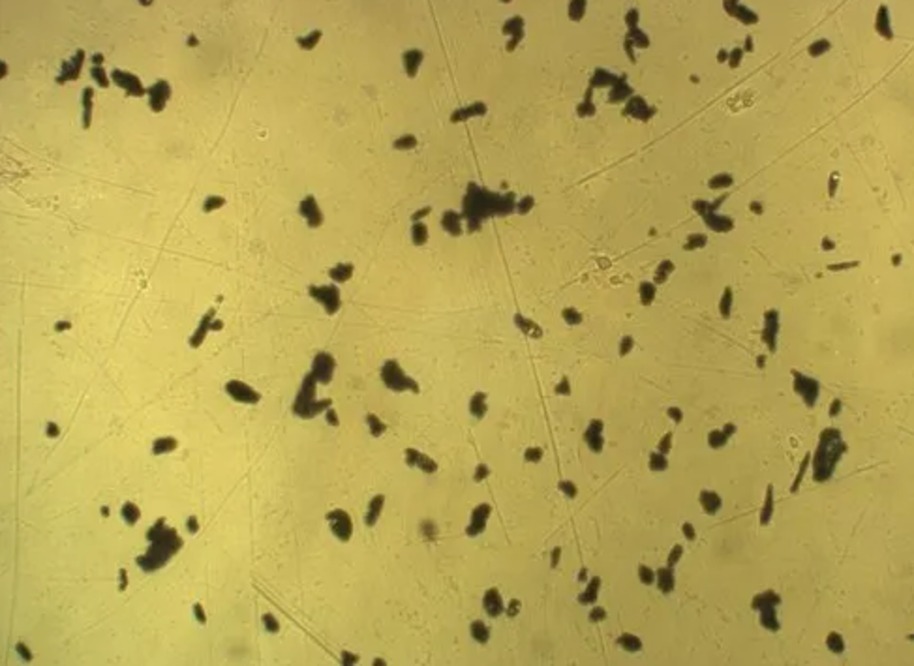
Counting contamination particles manually can work for limited inspection requirements, but the process becomes increasingly difficult when laboratories need repeatable measurements, documented results, particle classification, and regular sample throughput. This is where a Particle Analyzer can provide a more structured approach.
For manufacturing and quality laboratories in Shivajinagar, Pune, the decision is not simply whether automation is "better." The correct question is whether automated particle analysis solves the limitations of the existing inspection process.
Manual Particle Evaluation
Manual inspection generally relies heavily on the operator's observation and measurement process.
It may be suitable when sample volumes are low, requirements are relatively simple, and only basic qualitative examination is needed.
Its main advantage is straightforward operation without requiring an extensive automated workflow.
However, as cleanliness specifications become more detailed, several limitations can appear. Counting large numbers of particles manually can take time, and results may be influenced by operator judgement.
Documentation can also become cumbersome when customers require repeatable particle-size classifications.
Automated Particle Analysis
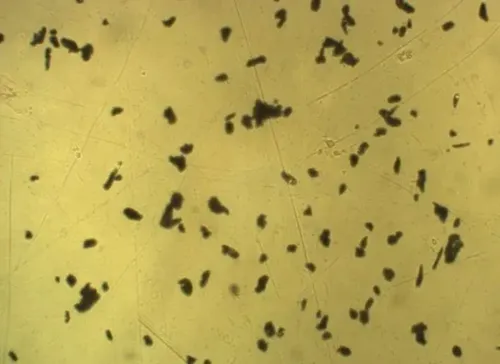
A cleanliness particle analyzer combines imaging and software-assisted measurement to evaluate particles collected during a cleanliness test.
Depending on the system configuration, analysis may include:
Particle detection
Size measurement
Particle counting
Classification into defined ranges
Dimensional evaluation
Documentation of results
Storage of images and measurement data
Automation can be particularly useful when laboratories repeatedly analyze membrane filters and need consistent reporting.
Where Does a Millipore Particle Analyzer Fit?
A Millipore Particle Analyzer is typically associated with evaluating particles captured on a membrane during component cleanliness testing.
The workflow still depends on proper contamination extraction and filtration. Automating the analysis stage does not correct mistakes made during sample preparation or extraction.
This distinction is important.
If the extraction process is inconsistent, a highly capable analyzer may simply produce precise measurements of an unreliable sample.
Which Approach Is Better for Your Laboratory?
Consider the actual workload rather than choosing based solely on equipment specifications.
Manual evaluation may remain practical when:
Testing frequency is low.
Particle requirements are uncomplicated.
Quantitative reporting is limited.
Samples contain relatively few particles.
An automated system becomes more attractive when:
Test volumes are increasing.
Customers require detailed cleanliness reports.
Multiple particle-size classes must be evaluated.
Operator-to-operator consistency is important.
Historical test data needs to be retained.
Analysis time has become a bottleneck.
Look Beyond Analysis Speed
For companies in Pune and Maharashtra evaluating a particle-analysis system, software usability, measurement capability, optical configuration, reporting flexibility, calibration, sample handling, and application support deserve attention alongside speed.
The laboratory should also determine which cleanliness standards or customer specifications it expects to work with.
Conation Technologies Pvt. Ltd. in Shivajinagar provides solutions associated with contamination analysis and particle evaluation for industrial applications.
A Particle Analyzer creates the greatest value when it improves the consistency and traceability of a cleanliness-testing process, not simply when it counts particles faster.
Before investing, laboratories should map their current workflow from extraction through reporting. That makes it easier to identify whether automation will remove a genuine quality-control bottleneck and which system capabilities actually matter.