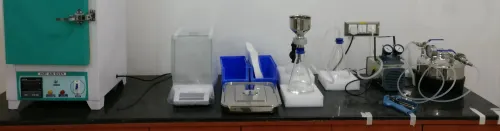

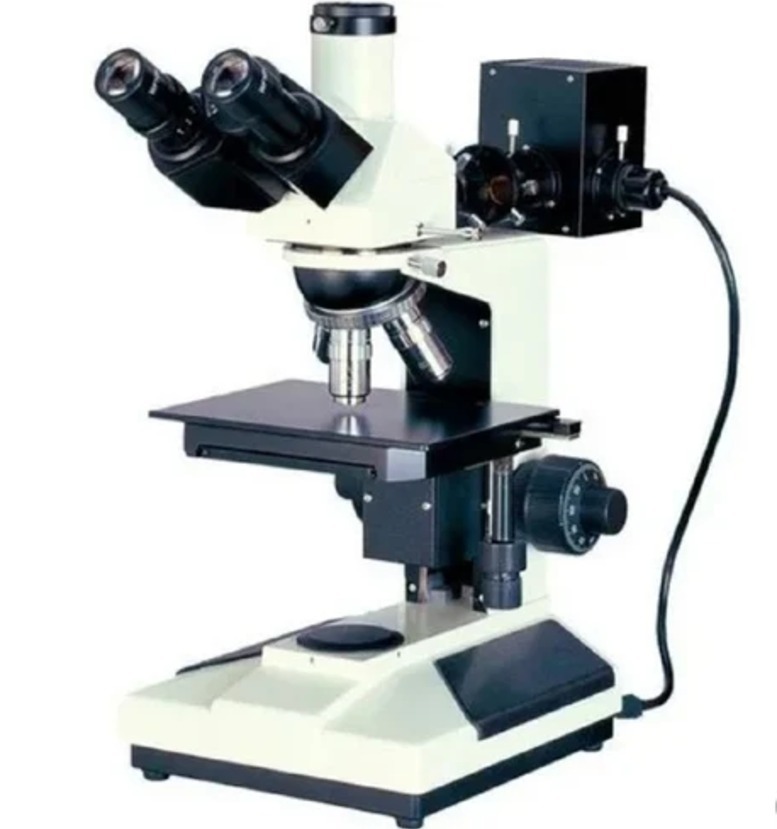
When manufacturers need to determine how much particulate contamination remains on a component, visual inspection alone provides limited information. Millipore Analysis offers a more systematic approach by extracting contamination from the test component and examining the collected particles.
For engineering and quality teams in Shivajinagar, Pune, this type of testing can be particularly relevant when manufacturing automotive parts, hydraulic components, precision-machined products, valves, pumps, fuel-system parts, or assemblies where residual particles may interfere with operation.
What Is Millipore Analysis?
The term is commonly associated with a cleanliness-testing process in which contaminants are removed from a component using an appropriate extraction procedure and collected on a membrane filter.
The filter provides a controlled surface on which the extracted contamination can be inspected and evaluated.
Depending on the testing objective and equipment being used, analysis may involve measuring or classifying particles according to characteristics such as size, count, and type.
The process generally involves three broad stages: extracting contamination, filtering the extraction fluid, and evaluating the particles retained on the membrane.
Why Is Extraction Important?
A particle-analysis result is only meaningful when the extraction method represents the contamination actually present on the component.
Different components may require different extraction approaches depending on their geometry and accessible surfaces. Complex internal passages, blind holes, cavities, and channels can make contamination removal more challenging than testing a simple external surface.
The chosen procedure therefore needs to be consistent and repeatable.
If one sample is cleaned aggressively and another is cleaned only lightly, comparing their results may produce misleading conclusions.
What Happens After Filtration?
Once the contamination has been collected on the membrane, the filter can be evaluated using suitable optical and image-analysis equipment.
Rather than manually estimating whether a filter appears heavily contaminated, a particle-analysis system can help produce quantitative information. Depending on the method, the operator may be able to determine particle dimensions, classify particles into size ranges, and document the contamination found.
This creates data that can be reviewed against the cleanliness requirement defined for the component.
What Can Affect Millipore Test Results?
Several practical factors deserve attention:
Cleanliness of the test environment
Condition of extraction equipment
Quality of the test fluid
Handling of membrane filters
Background contamination
Extraction duration and technique
Correct definition of the test area
Calibration and configuration of analysis equipment
A poorly controlled test environment can introduce particles that did not originate from the component. For this reason, contamination control during testing is as important as the subsequent particle measurement.
When Is Millipore Analysis Useful?
It can be used during product development, production validation, supplier evaluation, process improvement, cleanliness audits, and investigation of contamination-related failures.
Manufacturers in Pune and other Maharashtra industrial regions may also use cleanliness testing when customer specifications require documented particle limits.
Conation Technologies Pvt. Ltd. in Shivajinagar provides technologies associated with contamination and particle evaluation for industrial applications.
Ultimately, a Millipore Analysis should answer a practical quality question: what particulate contamination is present after a defined extraction procedure, and does the result meet the cleanliness requirement established for that component?
When the procedure is controlled correctly, the resulting data can provide considerably more insight than a simple visual judgement of cleanliness.