

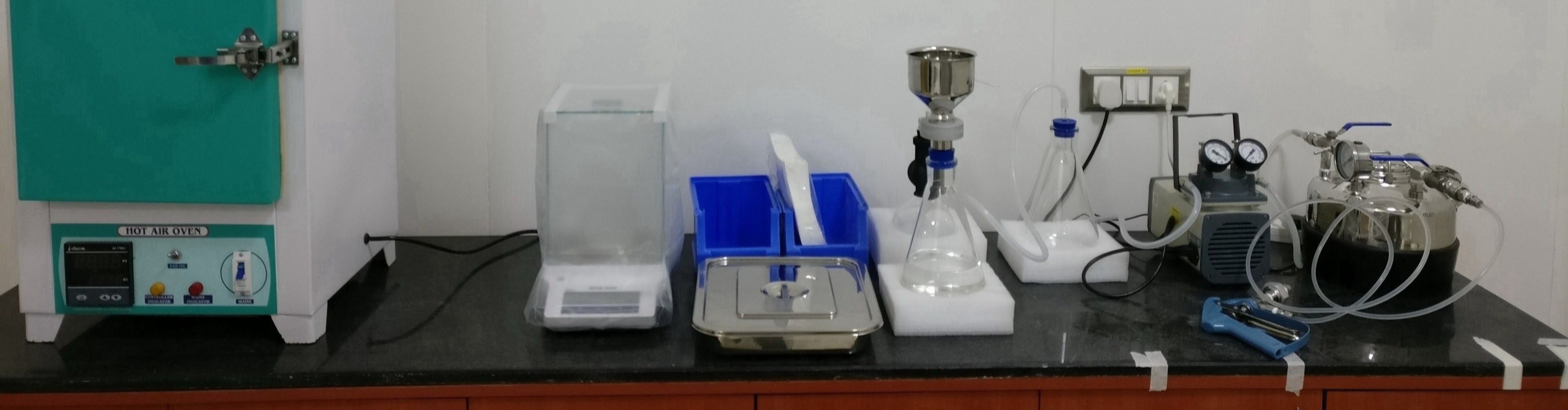
Contamination inside a manufactured component is not always visible to the naked eye. A component may appear clean on the outside while still containing metallic particles, fibres, machining residue, dust, or other contaminants capable of affecting its performance. This is why Contamination Analysis has become an important quality-control activity for industries where component cleanliness directly influences reliability.
For manufacturers and engineering teams in Shivajinagar, Pune and across Maharashtra, contamination analysis provides a structured way to determine what unwanted particles remain on or inside a component after manufacturing, cleaning, assembly, or handling.
Technical cleanliness is particularly relevant in automotive, hydraulics, precision engineering, aerospace, bearings, fuel systems, lubrication systems, and other applications involving narrow passages or sensitive moving parts.
What Does Contamination Analysis Examine?
The purpose is not simply to decide whether a component "looks clean." A technical analysis may examine several characteristics of the extracted contamination, including:
Particle quantity
Particle size
Particle distribution
Maximum particle dimensions
Metallic and non-metallic contamination
Fibres or other residue
Particle morphology, depending on the analysis method
These findings provide measurable information that can be compared with internal cleanliness requirements, customer specifications, or applicable test standards.
Why Can Small Particles Become a Serious Problem?
The importance of a contaminant depends on where the component is used. A particle that has little effect in one application may create a significant functional risk in another.
For example, particles circulating through hydraulic or lubrication systems may contribute to abrasion or interfere with moving surfaces. Contamination in precision assemblies can obstruct small passages, affect clearances, or become trapped between contacting parts.
This makes particle cleanliness more than a housekeeping issue. It can become part of product quality, process control, and failure prevention.
Where Does Contamination Come From?
Particles can enter a component at several stages of production. Common sources include machining operations, burr formation, washing processes, assembly areas, storage containers, packaging materials, transportation, and handling.
Even when a cleaning process is already established, contamination analysis can help determine whether that process is consistently achieving the required result.
When excessive particles are detected, the findings can support investigation into questions such as:
Is the machining process generating unusual debris?
Is component washing sufficiently effective?
Is contamination being introduced during assembly?
Are storage and packaging conditions controlled?
Has the process changed between production batches?
This turns cleanliness testing into a useful process-improvement tool rather than merely a final inspection activity.
Why Pune Manufacturers Are Paying Attention to Technical Cleanliness
Pune and the surrounding Maharashtra industrial belt support extensive automotive, engineering, component manufacturing, machine-building, and precision manufacturing activity. As component specifications become tighter, suppliers increasingly need objective methods for verifying cleanliness rather than relying solely on visual inspection.
A structured contamination analysis process can provide data that production, quality, supplier-development, and engineering teams can interpret together.
Conation Technologies Pvt. Ltd. in Shivajinagar works in the field of contamination and material-analysis solutions used for such industrial quality applications.
The key principle is simple: cleanliness should be measurable when contamination can influence product performance. By identifying, measuring, and evaluating particles instead of assuming a component is sufficiently clean, manufacturers can make better-informed decisions about cleaning effectiveness, process stability, and component quality.


