
A freshly manufactured component may look clean but still contain microscopic particles left behind by machining, handling, assembly, or washing. Millipore Analysis provides manufacturers with a structured method for investigating these contaminants and determining whether component cleanliness meets the required specification.
For manufacturing facilities across Bangalore and Karnataka, the technique can be particularly relevant where hydraulic, automotive, precision-engineered, machined, or fluid-carrying components have defined cleanliness requirements.
The basic principle is straightforward. Contamination is extracted from the component, collected on a suitable membrane filter, and then evaluated. The actual procedure, however, needs careful control because extraction conditions and analysis settings can directly influence the reliability of the result.
What Happens During a Millipore Test?
The exact procedure depends on the component and applicable specification, but a cleanliness assessment generally involves several controlled stages.
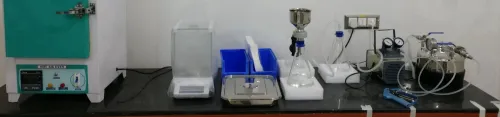
First, the test component and extraction method are defined. Contaminants may be removed using techniques appropriate to the component geometry and test requirement.
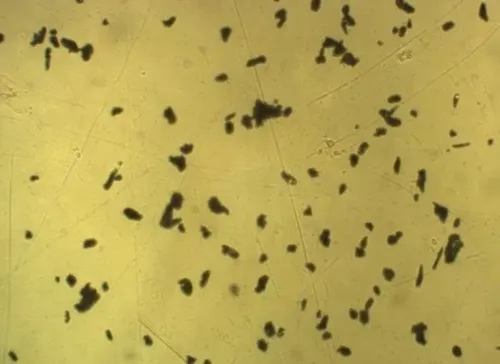
The extracted material is then passed through a membrane filter. Particles retained on this filter become the sample for subsequent examination.
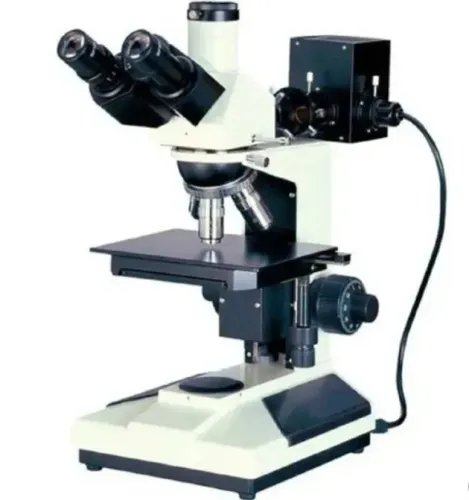
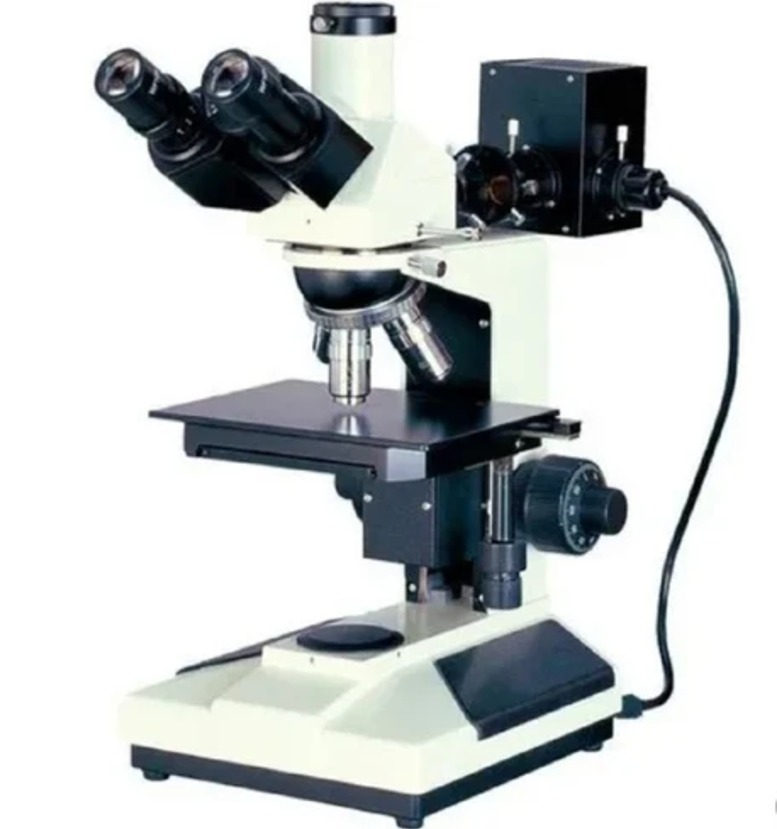
After appropriate preparation, the membrane is inspected using a particle analysis or microscopy system. Depending on the method, the system can help identify and measure particles based on characteristics such as dimensions and quantity.
Finally, the results are documented and interpreted against the applicable cleanliness specification.
Why the Extraction Process Matters
A sophisticated analyzer cannot compensate for an inconsistent sample preparation process.
If one operator uses different extraction conditions from another, the results may not be directly comparable. The same issue can arise when test areas, fluid quantities, extraction times, equipment cleanliness, or handling practices change between samples.
A useful Millipore test procedure therefore considers:
Defined test component or surface area
Controlled extraction conditions
Suitable filtration method
Background cleanliness
Appropriate membrane handling
Consistent particle measurement settings
Traceable reporting
This repeatability is important when manufacturers use cleanliness data for batch comparison, customer reporting, supplier assessment, or process improvement.
Where Particle Analysis Adds Value
Manual observation can provide useful information, but automated or software-assisted particle analysis can improve consistency when numerous particles need to be detected and measured.
A Millipore Particle Analyzer can help quality teams evaluate membrane samples systematically. Instead of depending entirely on subjective visual judgment, image-based measurement can provide structured information that is easier to compare over time.
This becomes valuable when a Bangalore manufacturing facility wants to investigate whether a washing process is performing consistently or whether contamination is entering during machining, assembly, transportation, or storage.
Millipore Testing Is Part of a Larger Quality Process
A test result becomes more useful when it leads to an engineering question.
If contamination rises unexpectedly, where did the particles originate? If large particles repeatedly appear, which process could be generating them? If cleanliness improves after a washing change, is the improvement repeatable?
Conation Technologies Pvt. Ltd. provides technologies relevant to cleanliness testing and particle evaluation for industrial quality-control applications in Bangalore.
Ultimately, Millipore analysis is most valuable when treated as a controlled measurement process rather than simply a laboratory activity. Reliable extraction, careful filtration, consistent particle analysis, and meaningful interpretation together give manufacturers a clearer picture of component cleanliness and the processes influencing it.