
Modern manufacturing depends on components that are increasingly precise, compact, and sensitive to contamination. A particle that appears insignificant to the naked eye can affect lubrication, restrict a narrow passage, interfere with a sealing surface, or contribute to premature component wear. This is why Contamination Analysis has become an important quality-control activity for manufacturers working with critical parts and assemblies.
For engineering and manufacturing companies in Bangalore, Karnataka, technical cleanliness is particularly relevant in automotive components, hydraulics, precision machining, aerospace-related production, pumps, valves, fuel systems, and other applications where unwanted particles can influence product performance.
Contamination analysis is essentially the process of detecting, measuring, classifying, and evaluating particles present on a component or within a controlled sample. Instead of relying only on visual inspection, manufacturers can obtain measurable information about the contamination condition of a part.
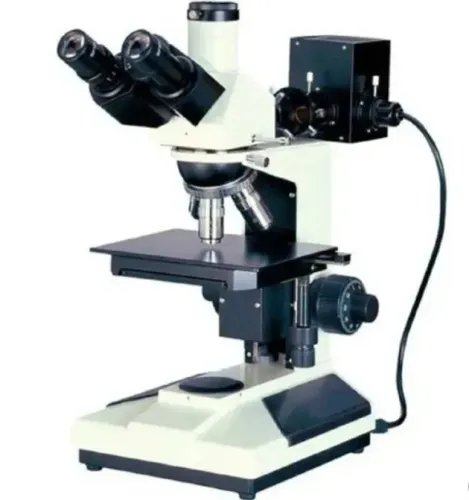
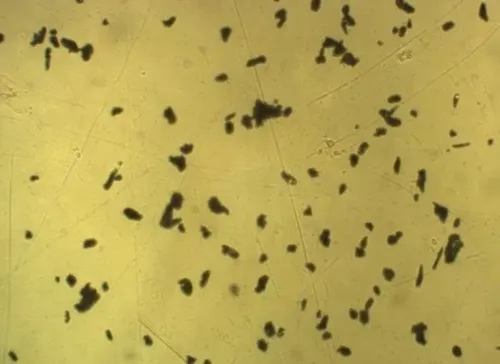
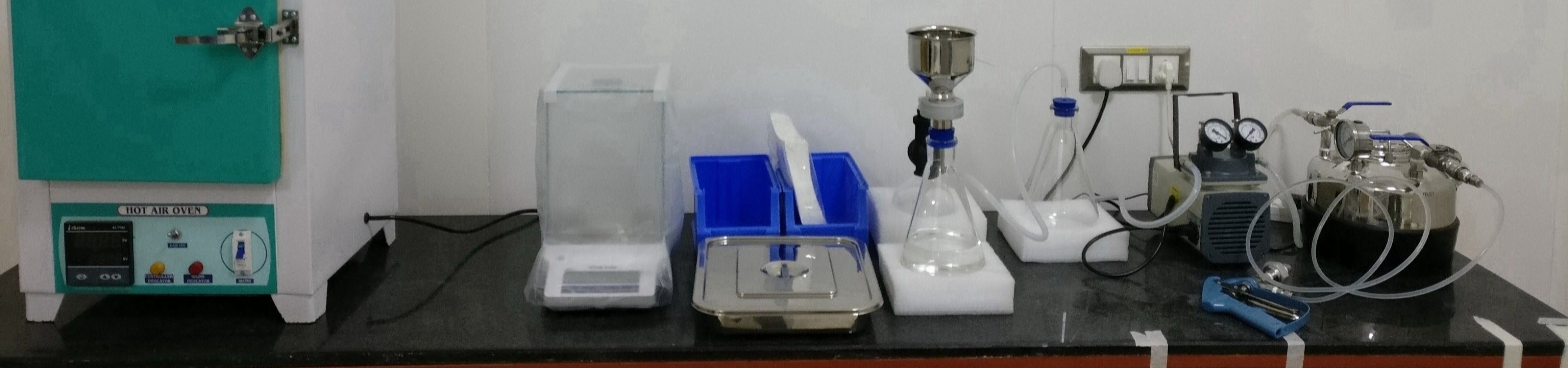
A typical analysis may involve extracting particles from the component, collecting them on a membrane filter, examining the filter under an appropriate optical system, and evaluating particles according to specified criteria. Depending on the application, characteristics such as particle size, quantity, distribution, and type may be relevant.
Why Particle Contamination Deserves Attention
Contamination can enter a manufacturing process at several stages. Machining residues, metallic particles, abrasive material, dust, handling, washing inefficiencies, packaging, storage, and assembly conditions can all influence component cleanliness.
The challenge is that a component can appear visually clean while still carrying particles capable of creating functional problems.
Contamination analysis helps answer practical questions such as:
How many particles remain after cleaning?
What sizes of particles are present?
Are unusually large particles appearing?
Is the cleaning process producing consistent results?
Has contamination increased after a process change?
Are components meeting defined cleanliness requirements?
This turns cleanliness from a subjective observation into measurable quality data.
The Role of Cleanliness Standards
Technical cleanliness requirements are often defined using customer specifications, internal quality standards, or recognized standards such as ISO 16232. The applicable method and acceptance criteria depend on the component, industry, and customer requirement.
The objective is not simply to declare a component "clean." Manufacturers need a repeatable procedure for extracting, collecting, measuring, and documenting contamination.
Consistency becomes especially important when results are compared between production batches, suppliers, cleaning processes, or manufacturing locations.
How Better Analysis Supports Process Improvement
Particle data can reveal more than whether a sample passes or fails. Changes in particle counts or size distribution may indicate an upstream process issue.
For example, unexpected metallic contamination could lead a quality team to investigate machining or deburring. Increased contamination after washing could indicate that cleaning parameters need attention. Differences between batches may point toward handling, storage, or process-control variations.
In this way, contamination analysis can become part of root-cause investigation and continuous improvement rather than being limited to final inspection.
Bangalore's large engineering and manufacturing ecosystem creates growing demand for reliable measurement and inspection technologies. Conation Technologies Pvt. Ltd. supports this requirement through solutions associated with technical cleanliness, particle analysis, microscopy, metallography, and material testing.
For manufacturers, the real value of contamination analysis lies in understanding what remains on a component after production and cleaning. When particle contamination is measured consistently, quality teams gain stronger evidence for process control, troubleshooting, supplier evaluation, and component cleanliness verification.