
Purchasing a Cleanliness Analyzer is not simply an equipment-selection exercise. The system needs to fit the components being tested, the applicable cleanliness specification, the laboratory's sample volume, and the reporting requirements expected by customers or internal quality teams.
For automotive suppliers, precision manufacturers, hydraulic component producers, and engineering companies in Bangalore, Karnataka, defining these requirements before requesting a system demonstration can make the selection process considerably more effective.
Confirm the Standard or Customer Specification
Begin by identifying exactly how cleanliness must be evaluated.
If testing needs to align with ISO 16232 or a customer-specific method, establish the required particle measurement criteria, classification approach, and reporting expectations.
Do not assume that every particle analyzer automatically supports every cleanliness workflow.
The test specification should drive equipment selection.
Review the Complete Testing Process
The analyzer is only one part of technical cleanliness testing.
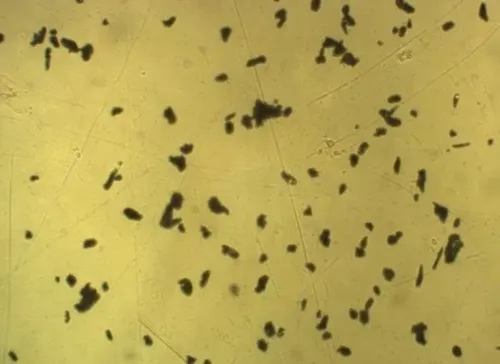
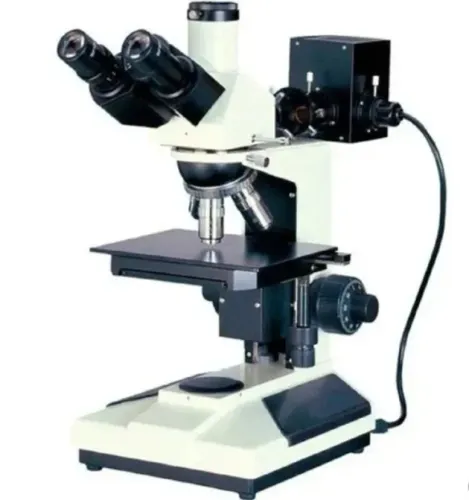
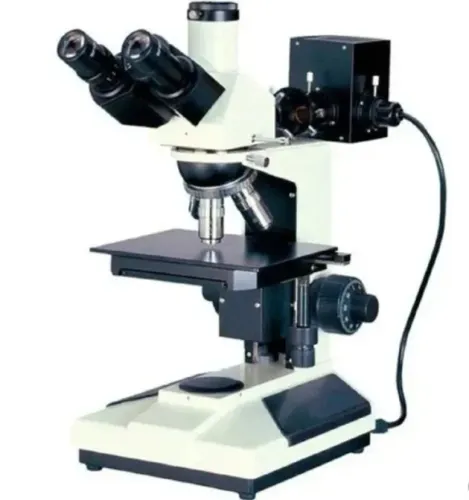
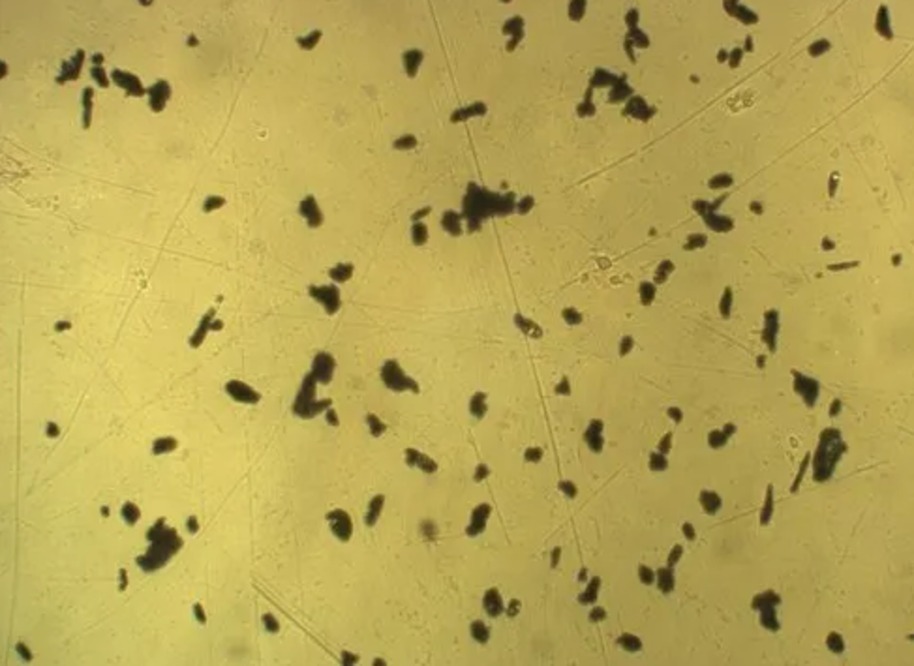
A complete process can involve contamination extraction, filtration, membrane handling, microscopic analysis, classification, and reporting. Laboratory conditions and background contamination also need consideration.
Before selecting equipment, map the workflow from receiving the component to issuing the final report.
This helps reveal whether additional equipment, accessories, laboratory infrastructure, or process controls will be required.
Evaluate the Actual Components
Bring representative component information into the selection discussion.
A manufacturer testing small precision parts may need a different extraction arrangement from a company evaluating larger automotive or hydraulic components. Internal passages, cavities, complex geometries, and component size can influence how contamination needs to be extracted.
This is why equipment selection should not be based solely on a generic product demonstration.
Check Analysis and Reporting Capabilities
Ask how the system handles the information generated during a Particle Analysis Test.
Useful evaluation points include particle detection, dimensional measurement, classification, image documentation, result storage, report generation, and the ability to apply the parameters required by the intended test method.
Quality teams should also consider how easily operators can retrieve and compare previous results.
Consider Daily Sample Volume
Throughput affects both equipment selection and laboratory design.
A facility testing occasional development samples may prioritize flexibility. A production-quality laboratory analyzing multiple membranes each shift may place greater emphasis on automation, measurement speed, standardized workflows, and report generation.
Estimate realistic sample volumes rather than only today's workload.
Assess Training and Application Support
Technical cleanliness testing combines equipment operation with method control.
During provider evaluation, ask how installation, operator training, method understanding, application guidance, and ongoing technical support are handled.
Conation Technologies Pvt. Ltd. provides technical cleanliness and particle-analysis solutions for manufacturing and quality-control applications in Bangalore. Discussions with a provider are more productive when buyers can share their component type, applicable specification, expected sample volume, and reporting needs.
Know When Your Laboratory Is Ready
A company is generally better prepared to implement cleanliness testing when it can answer four questions clearly: what needs to be tested, why it needs to be tested, which specification applies, and how frequently testing will occur.
Once these requirements are defined, system evaluation becomes much more precise.
The most suitable cleanliness analyzer is not necessarily the system with the largest feature list. It is the one that integrates logically with extraction, filtration, measurement, documentation, operator skills, and the quality decisions that follow from the results.